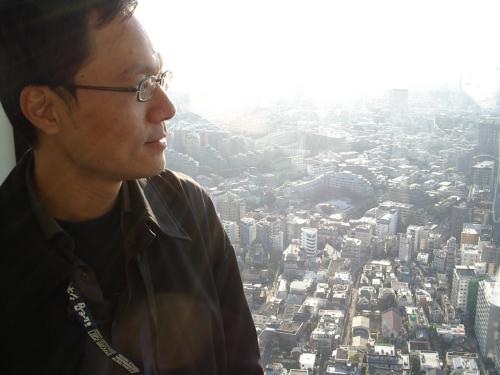
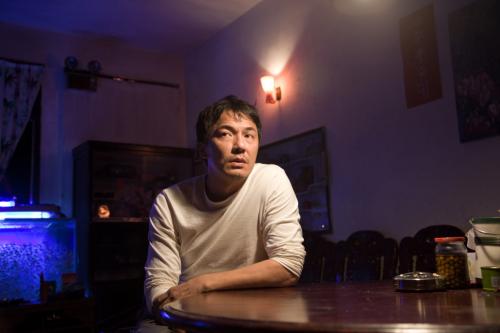
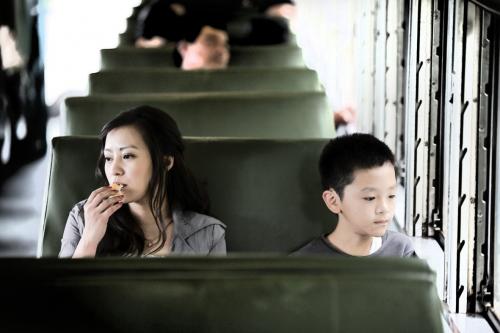
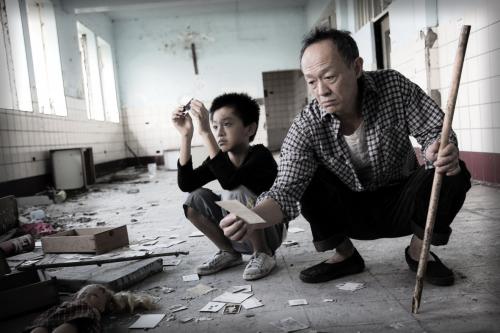
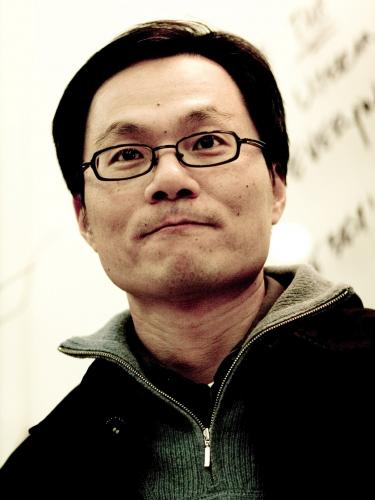
ICLP had the good fortune to host the festival’s programmer, well-known director and writer Yen Hung-ya, better known as Hung Hung. For those ICLP students who had the time and opportunity to attend this year’s 12th annual Taipei Film Festival that wraps up tomorrow (July 15th, 2010), the films offered a window into Taiwanese culture, and a thrilling look at the festival’s featured city Rio De Janeiro. Hung Hung spoke about what filming meant to him, as well as the significance and value behind the festival.
Variously likened to a fraud, a therapist, a petrified fountain of human thought and a slice of cake by its most famous practitioners, film represents something different to each person. For Hung Hung, movies have impacted the very way he sees the world. “When I was about 20 I saw a movie by Francois Truffaut and it opened my eyes,” he said. “At the time I was obsessed by culture and books, but he helped show me the richness human relationships, it was very exciting.”
Although the Taipei Film Festival is perhaps not as renowned as its cousin the Golden Horse Film Festival, Hung Hung said one of its most valuable aspects is its focus on a different city each year. This year the city of choice was Rio De Janeiro, as portrayed by a number of Brasil’s best-known films like Rio, 40 Degrees and Bye Bye Brasil. He said he hoped the movies would help enlighten Taiwanese people about Brasil, but also show how similar people from different cultures are.
At the same time he said the festival presented a great opportunity for young Taiwanese filmmakers to exhibit their movies. “Many Taiwanese movies these days are low budget, and they don’t have the opportunity to be released officially, so festivals like these are their only way to get their art into the world,” he said.
Although one might expect these journeyman filmmakers to be overburdened by Taiwan’s rich tradition of masters such as Edward Yang, Hou Hsiao-hsien and Tsai Ming-liang, Hung Hung said he believed Taiwan’s younger directors are blazing their own paths and offering a much needed change in style from Taiwan’s banner documentary-styled directors.
But he also admitted these young Turks are entering a film world radically changed by the economic rise of mainland China. “There is a real focus on the mainland Chinese market these days, people are trying to cooperate with Chinese film companies and use Chinese actors and actresses, but it can be difficult because between Taiwan and China there are many different thoughts and ideas about filming,” he said.
Regardless of cultural differences Hung Hung stressed the similarity of people across the world and said the greatest films transcend themselves and attain universality. “I can’t think of a world without movies,” Hung Hung said. “We learn from movies how to act in our own culture, how to love, how to deal with our parents; their impact is huge and there are many great discussions that we must have about films in today’s world.”