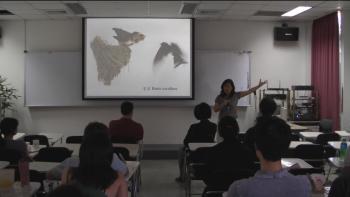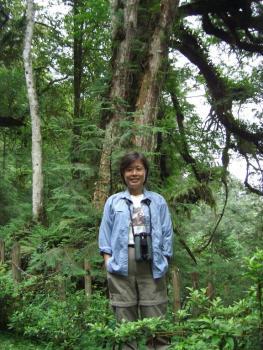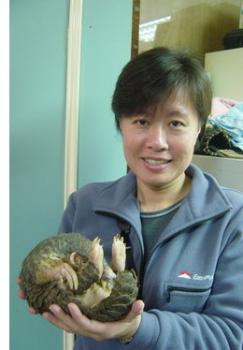
 Professor Yuan speaks from experience when she discusses how life in the wild—and her career in the natural sciences—evolved. A researcher of Taiwan’s biodiversity and wildlife instructor at National Taiwan University, Yuan grew up in the big city—largely removed from nature—before a chance bird watching trip led her to her life’s calling.
Yuan advises students to be open-minded, yet systematic, when seeking their passion in life. “Explore different fields, create three-year plans, and get ready for when opportunity strikes…” Few people know exactly what they want to do from an early age. But through a careful process of elimination and well-informed decision making, students stand a good chance of finding work they love.
This approach worked for Yuan. In college, she started in the Zoology department where she visited various labs to try her hand at culturing cells. When only bacteria formed, Yuan ruled out lab work and headed outdoors. She researched flying squirrels and planned to become a park ranger at one of Taiwan’s national parks. However, influenced by her boyfriend’s desire to study overseas, Yuan switched gears and completed a Ph.D. in Natural Resources at Cornell before going on to become a professor.
Professor Yuan is characteristically upbeat when discussing environmental protection. Educational programs have dramatically raised public awareness of the issue over the past few decades. Yuan says that while Taiwan’s government has done a good job of reducing the impact of development on the environment, it still needs to consider not just economic goals but environmental costs when establishing subsidies and setting taxes. Training and licensing eco-tour guides, developing local community working groups, and teaching biodiversity to non-biology majors through fieldwork are other promising approaches that businesses, non-profits, and universities are taking to improve environmental education at a grass-roots level.
Surrounded by trees draped in vines, exotic birds, and a dizzying array of insects, students in Taiwan learn quickly of the island’s biological diversity. How do we take this opportunity to peacefully co-exist with nature? Professor Yuan puts it simply—control your cravings. Reducing our consumption of material goods will conserve resources and preserve the environment without significantly reducing our quality of life. Easy steps like recycling and not littering can also make a difference. Professor Yuan, for one, leads by example: as we leave the room at the end of our interview, she instinctively switches off the lights.