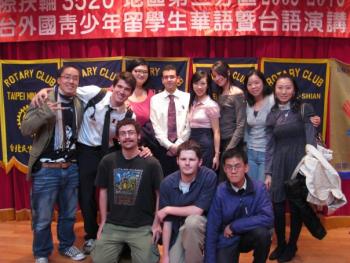
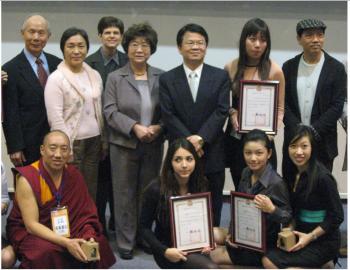
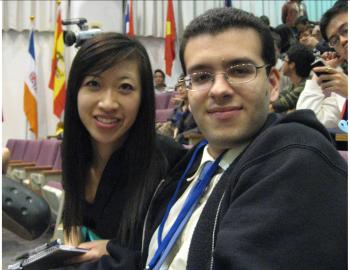
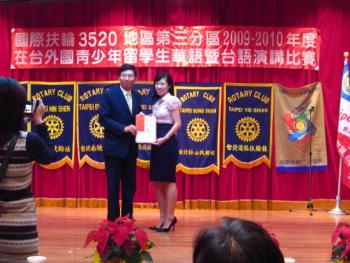
Stepping into the hallway to take a breather from the tense atmosphere at the Rotary Club Speech Contest for foreign students, I was approached by an elderly lady. She expressed how deeply moved she was by my speech about my personal reflections on the typhoon and flood that devastated southern Taiwan this past August. However, her ending comment echoed in my mind the same way her stiletto footsteps echoed in the empty hallway. She said, “It’s not surprising that you speak so fluently, you are Chinese…after all!”
Fighting every protesting fiber in my body, I smiled, nodded, and thanked her for the kind words of encouragement. Yet, I cannot help but think that this is yet another inherent stereotype deeply rooted within society. It seems that every single Chinese American should be able to speak Chinese, the same way that all Asians must excel in mathematics—a shadow that followed me throughout my life. Growing up in a bi-cultural Chinese American family, my only acquaintance with the Chinese language and culture was from the perspective of a third-party observer. Living in Monterey Park, a city best known as Little Taipei, I experienced how dedicated Chinese immigrant families are in their attempts to celebrate and maintain their traditional customs. At times, I felt that they were more Chinese than those living in China. As a young child, not only was it hard for me to identify with Chinese residents in my community, at times I even felt repulsed by them.
One particular traditional value that caught my attention as a child was frugality—something that at the time I could only describe with a common English cliché: “A penny saved is a penny earned.” When visiting popular buffet-style restaurants I was appalled by the way some Chinese customers pushed, shoved, and completely disregarded the orderly line that the rest of the customers have formed. They not only devoured plate after plate of food, but they also utilized “home-made” to-go containers (formed from plastic peanut butter jars) to take food home. This behavior was so at odds with my own values that I not only distanced myself from these individuals, but I also felt a sense of embarrassment for their backwardness. Unable to relate, I self-identified with only the latter part of my “Chinese American” ethnicity. As a result, I never questioned the fact that my family celebrates Thanksgiving and Christmas but not Chinese New Year; the fact that we do not eat at Chinese restaurants even though we live in Monterey Park (a city located ten minutes from Los Angeles Chinatown); the fact that my mother makes casserole but probably has no idea that Chinese-style “phoenix claw” refers to a dish featuring chicken feet.
As I grew older, I also grew more and more curious about the fuzzy aspects of my heritage that seemed to exist and not exist at the same time. I began to wonder why it was that I could not speak Mandarin. I remember attending Japanese school but never Chinese school—why? Therefore, in college I decided to learn Chinese as a way to discover the part of me that remained invisible for the past twenty years of my life. However, this learning journey has been anything but ordinary. Placed in the heritage track of beginning Chinese courses, I imagined myself the tortoise that had strayed so far from the main course that there would be no hope of ever catching up to the hare. From mandatory office hours to being ridiculed and teased as the “whitest” person to come out of a city better known as Little Taipei, I have experienced the rollercoaster ride of learning Chinese. In order to muster a passing grade on each of the daily quizzes, I forced myself to memorize how to write the Pinyin for each phrase as well as how to “draw” each Chinese character. As if re-associating new sounds with the Roman alphabet was not difficult enough, the Chinese language is tonal as well. On top of attending mandatory office hours, I resorted to visiting my parents every weekend in order to practice speaking Chinese. We even created a game to make things more interesting! For instance, when an interesting phrase comes up, my mother has taken to quizzing me on the tones of each character. And my father, being the humorous individual he is, would compete with me to see who can answer faster.
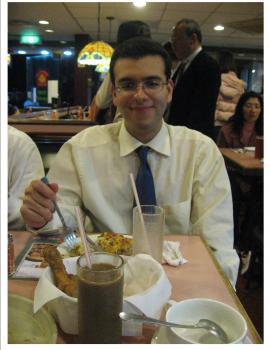
Reflecting upon this nearly two year journey of learning Chinese, I have not only learned a new language but also gained valuable life lessons. Coming here to Taiwan, I have also been given the opportunity to reunite with relatives that were formerly just blood-related strangers to me. In addition to forging lifelong friendships, sharing memories and laughter, I have also come to appreciate my own heritage and culture. While friends still continue to tease and “torture” me with trips to Chinese restaurants, where they watch me try various delicious but sometimes strange Chinese delicacies, I believe this chapter in my life has redefined who I am as a person.